
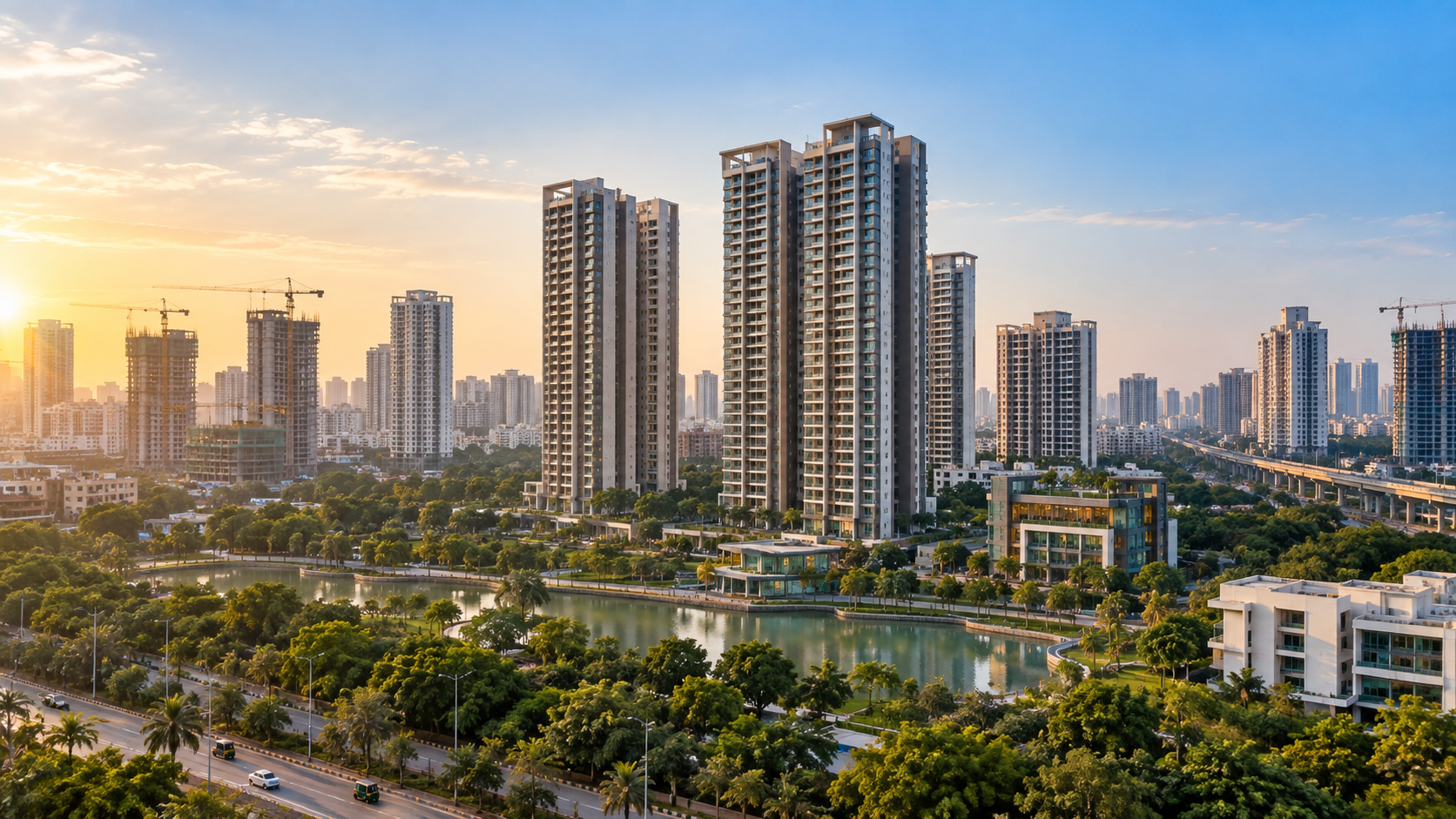

The top real estate developers in India operate across very different markets—from premium housing and large townships to offices, malls and industrial cities. This 2026 APICSTOCK guide compares ten prominent developers using disclosed scale, execution history, geographic reach, project variety, customer relevance and independently checkable company information.
Editorial note: There is no official national “top 10 builders” ranking. This is an informational editorial assessment, not investment advice, a paid placement or an endorsement of every project sold by the companies below. A strong corporate brand does not replace project-level legal, technical and financial checks.
How we assessed the top real estate developers in India
We compared the top real estate developers in India using the same practical criteria so readers can understand why each company appears in this editorial list.
- Delivery and operating scale: completed developments and active portfolio.
- Geographic reach: meaningful presence across major Indian property markets.
- Project range: residential, commercial, township, retail or industrial capability.
- Public disclosure: accessible filings, investor reports and regulatory information.
- Buyer relevance: track record, service systems and ability to complete complex projects.
- Sustainability: credible building certifications and measurable environmental programmes.
| Rank | Developer | Core strength | Key markets |
|---|---|---|---|
| 1 | DLF | Large integrated urban developments | Delhi NCR and major metros |
| 2 | Godrej Properties | National residential growth | 15+ Indian cities |
| 3 | Lodha | Residential scale and townships | MMR, Pune, Bengaluru |
| 4 | Prestige Estates Projects | Diversified mixed-use development | South India and expanding metros |
| 5 | Brigade Group | Residential, offices and hospitality | Bengaluru-led southern markets |
| 6 | SOBHA | Backward-integrated construction | Bengaluru, NCR and multiple cities |
| 7 | Oberoi Realty | Premium Mumbai developments | Mumbai Metropolitan Region |
| 8 | Mahindra Lifespaces | Sustainable homes and industrial cities | Mumbai, Pune, Bengaluru, Chennai |
| 9 | Tata Realty & Infrastructure | Commercial assets and diversified infrastructure | Major Indian business centres |
| 10 | Shapoorji Pallonji Real Estate | Engineering-led large developments | Multiple metropolitan markets |
1. DLF
Why it ranks: DLF combines a long development history with unusual scale across homes, offices, retail and hospitality. Its 2024–25 annual report states that it had developed 178 real estate projects covering about 349 million square feet, with a substantial future pipeline.
Major work: DLF City and DLF5 shaped large parts of Gurugram; Cyber City became a major office district; and residential projects such as The Camellias, The Dahlias and Privana demonstrate its premium-housing focus. Current disclosed activity includes projects across Gurugram, Mumbai, Goa, Chennai and other markets.
Buyer perspective: DLF’s scale and mixed-use ecosystem are advantages, but buyers must still check the exact promoter entity, state RERA record, possession schedule, maintenance structure and total acquisition cost for the selected phase. Source: DLF Annual Report 2024–25.
2. Godrej Properties
Why it ranks: Godrej Properties has expanded into one of India’s broadest listed residential platforms. Its official site says it is developing projects across more than 15 cities covering over 21.7 million square metres.
Major work: Its portfolio includes Godrej Garden City in Ahmedabad, Godrej City in Panvel, projects across Mumbai, Pune, Bengaluru, NCR, Hyderabad and other cities, plus plotted developments. The company’s asset-light partnership model allows it to enter multiple local markets while using the Godrej brand and central systems.
Buyer perspective: Project quality, partner structure and timelines can differ across cities. Verify the project-specific developer name, sanctioned plans and RERA disclosures rather than relying only on the group name. Source: Godrej Properties.
3. Lodha
Why it ranks: Lodha, listed as Macrotech Developers, reported ₹176.3 billion of pre-sales in FY2024–25 from roughly 40 operating projects. Its focus is concentrated in the Mumbai Metropolitan Region, Pune and Bengaluru.
Major work: Palava is a large planned city near Mumbai, while World Towers, Lodha Park and multiple neighbourhood-scale residential projects show the company’s range from premium towers to broader community development.
Buyer perspective: Large multi-phase developments require phase-specific review. Check infrastructure delivery, association handover, density, future construction around the selected tower and the MahaRERA or relevant state-RERA completion date. Source: Lodha Integrated Report 2024–25.
4. Prestige Estates Projects
Why it ranks: Prestige is a major diversified developer with residential, office, retail, hospitality and property-management experience. Its Bengaluru base and long southern-market presence have been complemented by expansion into other large cities.
Major work: Prestige Shantiniketan is a notable integrated development, while Forum malls, office parks and a wide residential portfolio demonstrate capability across several asset classes.
Buyer perspective: Mixed-use scale can improve surrounding amenities but may also create phased construction and traffic. Confirm tower-specific approvals, undivided land share where applicable, parking rights, common-area costs and handover terms. Source: Prestige investor information.
5. Brigade Group
Why it ranks: Brigade has built a diversified southern Indian platform spanning residences, offices, retail and hospitality. Its 2024–25 integrated reporting describes seven million square feet completed during the year and a strong Bengaluru market position.
Major work: Brigade Gateway brought homes, offices, retail and hospitality together in Bengaluru. The group also operates World Trade Center-branded business assets and residential communities across southern markets.
Buyer perspective: Check access roads, commercial activity near residential blocks, facility-sharing rules and the legally disclosed completion schedule. Source: Brigade Group investor information.
6. SOBHA
Why it ranks: SOBHA is known for a backward-integrated approach that brings several construction and interior-production activities within the organisation. It operates in residential development and contractual projects.
Major work: SOBHA City and numerous Bengaluru communities established the brand, while expansion into Gurugram, Greater Noida, GIFT City and other markets broadens its reach.
Buyer perspective: Construction control is useful, but buyers should independently inspect finishing, water sources, defect-liability terms, occupancy certificates and project-level delivery history. Source: SOBHA investor relations.
7. Oberoi Realty
Why it ranks: Oberoi Realty has a focused premium presence in the Mumbai Metropolitan Region, with residential, office, retail, hospitality and social-infrastructure projects.
Major work: Oberoi Garden City in Goregaon is its best-known integrated development. The company has also developed premium housing in Worli, Borivali, Mulund and Thane-area markets.
Buyer perspective: Mumbai purchases require close attention to carpet area, redevelopment obligations, title history, coastal or environmental restrictions where relevant, parking and substantial statutory charges. Source: Oberoi Realty investor information.
8. Mahindra Lifespaces
Why it ranks: Mahindra Lifespaces combines residential development with integrated industrial cities and places measurable emphasis on lower-carbon construction. The company states that it was India’s first real estate company with approved science-based targets.
Major work: Mahindra World City developments in Chennai and Jaipur demonstrate its industrial-city capability, while Mahindra Happinest and premium residential projects address different housing segments.
Buyer perspective: Sustainability labels should be translated into practical evidence: energy modelling, water systems, certification scope, maintenance costs and actual performance after occupation. Source: Mahindra Lifespaces sustainability reporting.
9. Tata Realty & Infrastructure
Why it ranks: Tata Realty & Infrastructure operates across commercial offices, retail, residences and infrastructure. Its FY2024–25 annual report describes a commercial portfolio of 9.4 million square feet across six Grade-A assets plus residential and transport assets.
Major work: Ramanujan Intellion Park in Chennai is highlighted for green-building performance. The portfolio also includes Intellion business parks and residential projects, including activity in Navi Mumbai.
Buyer perspective: Confirm which Tata subsidiary is the legal developer and rely on the project’s RERA entry and executed documents for final specifications. Source: Tata Realty investor information.
10. Shapoorji Pallonji Real Estate
Why it ranks: Shapoorji Pallonji Real Estate benefits from a wider engineering and construction heritage and has delivered residential and mixed-use developments in several Indian cities.
Major work: Shukhobrishti in Kolkata is a large affordable-housing development, while Joyville projects and premium urban developments show its range across customer segments.
Buyer perspective: Distinguish clearly between the real-estate developer, construction contractor and joint-venture partner. Check the exact promoter named in the RERA registration and all payment milestones. Source: Shapoorji Pallonji.
How buyers should compare builders safely
Even when considering the top real estate developers in India, buyers should verify the exact project rather than relying only on the parent brand.
- Search the project on the relevant state RERA portal and match the promoter, registration number and completion date.
- Ask a property lawyer to check title, encumbrances, approvals and the agreement for sale.
- Compare carpet area and total payable cost—not only the advertised base price.
- Visit completed projects by the same developer and speak with residents about defects and maintenance.
- Review construction progress, quarterly RERA updates and any extensions.
- Confirm occupancy certificate, water source, parking rights, society handover and recurring charges.
- Do not pay a booking amount because of an “assured return,” artificial deadline or unverified broker message.
Frequently asked questions
Which is the No. 1 builder in India?
No government body publishes a universal No. 1 ranking. APICSTOCK places DLF first in this editorial comparison because of its disclosed scale, long operating history and diversified portfolio; a different methodology could produce a different order.
Does a famous developer guarantee timely possession?
No. Delivery is project-specific and can be affected by approvals, finance, litigation, contractors and market conditions. Always review the project’s RERA record.
Is a RERA registration enough to make a property safe?
No. Registration improves disclosure and accountability, but buyers still need legal, financial and technical due diligence.
Should buyers choose national or local developers?
Neither category is automatically better. Compare verified delivery in the same city, construction quality, balance-sheet capacity, service record and the legal structure of the exact project.
Final perspective
The top real estate developers in India serve different locations, budgets and project types. The best developer for one buyer may be unsuitable for another. DLF and Lodha demonstrate scale; Godrej Properties has broad residential reach; Prestige and Brigade offer mixed-use capability; SOBHA emphasises construction integration; Oberoi Realty is highly focused on premium MMR projects; Mahindra Lifespaces and Tata Realty add sustainability and infrastructure depth; and Shapoorji Pallonji brings engineering heritage. Use this list to create a shortlist, then make the final decision only after project-level checks.
Explore more city-development and building guides in the APICSTOCK Guides & Articles hub.