
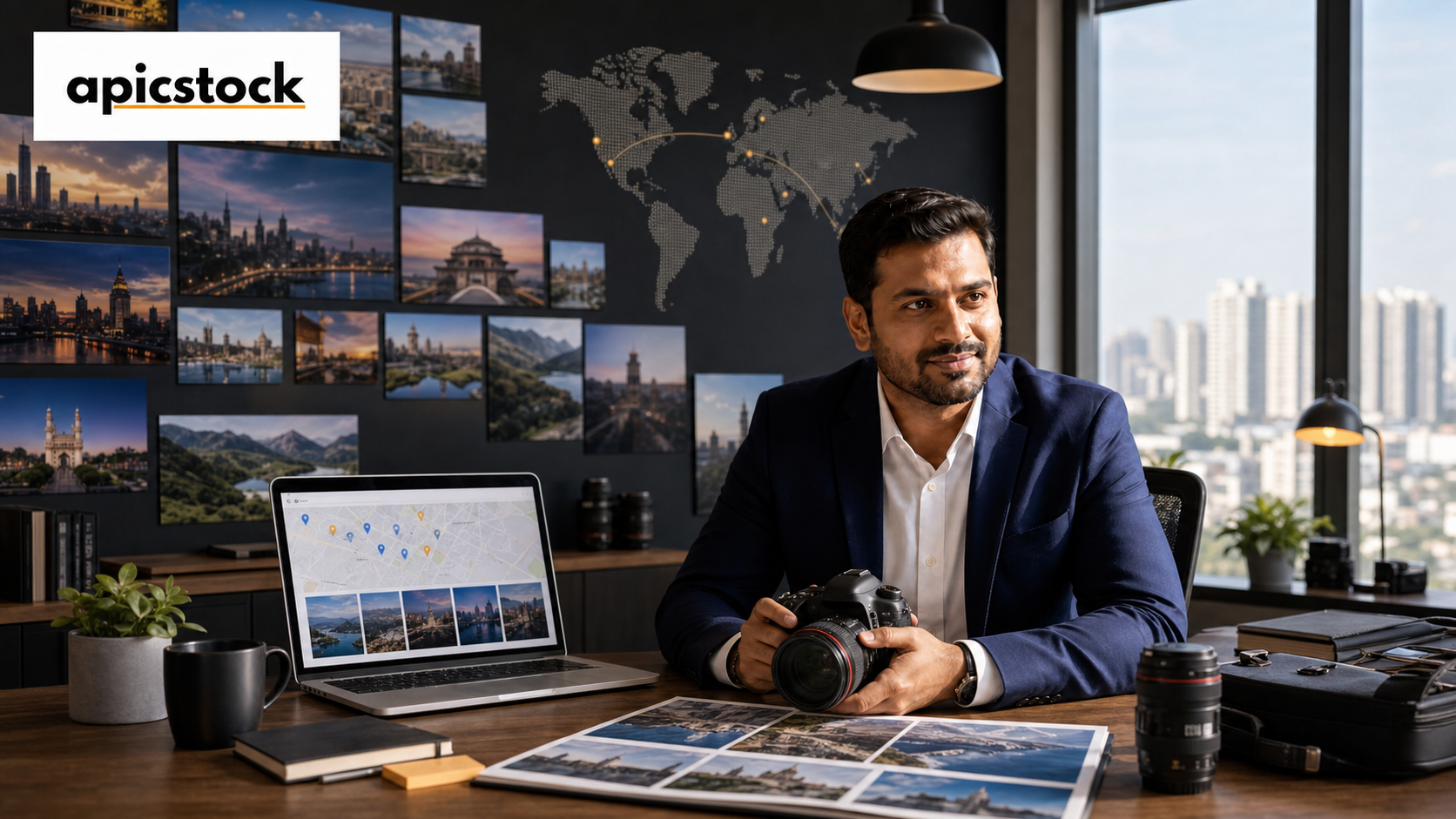

Ankush Kumar Paliyal Google Maps photography has generated more than 120 million cumulative photo views across over 5,700 published photographs. The achievement demonstrates how useful location photography can help people discover and understand real-world places at scale.
However, this number needs to be described accurately. It represents views recorded for photographs published on Google Maps. It does not represent website traffic, social-media followers, client revenue, confirmed customer visits or sales generated for individual businesses.
This article explains what the photography milestone represents, the principles behind useful location photographs and what photographers, hotels and local businesses can learn from Ankush Kumar Paliyal’s experience.
Google Maps Photography: Quick Facts
Photographer: Ankush Kumar Paliyal
Location: Navi Mumbai, Maharashtra, India
Published photographs: More than 5,700
Cumulative reach: More than 120 million Google Maps photo views
Primary lesson: Useful, accurate and consistently published location photographs can remain discoverable for long periods.
Important: Photo views should not be interpreted as confirmed visits, enquiries, followers, sales or income.
Who Is Ankush Kumar Paliyal?
Ankush Kumar Paliyal is a Navi Mumbai-based photographer, digital publisher and entrepreneur. His work spans photography, visual discovery, digital publishing, e-commerce content and practical business growth.
Photography forms one of the most clearly documented parts of his work. Through thousands of published Google Maps photographs, his images have helped users view locations before deciding to visit them.
His other ventures include APICSTOCK, an independent digital publishing and product-discovery platform, along with Anks Studios and Anks Photography.
Read the complete Ankush Kumar Paliyal profile for more information about his work and professional direction.
What Does 120 Million Google Maps Photo Views Mean?
A Google Maps photo view is recorded when a photograph is displayed to a user through a place listing or a related Google Maps experience. A photograph may be viewed when someone searches for a business, explores an area, checks directions or examines photographs associated with a location.
The cumulative figure indicates that Ankush’s published photographs have been displayed more than 120 million times collectively.
The number does not reveal exactly what each viewer did afterwards. It cannot independently prove that a person visited a location, contacted a business, booked a room or completed a purchase.
What the metric demonstrates
- A substantial body of photographs has remained visible through Google Maps.
- Location imagery can attract attention beyond a photographer’s immediate social network.
- Useful photographs may continue receiving views after their original publication.
- Consistent contribution can produce meaningful cumulative reach.
- Visual information plays an important role in how people research unfamiliar places.
What the metric does not demonstrate
- It does not represent 120 million unique individuals.
- It does not represent APICSTOCK website visitors.
- It does not represent social-media followers.
- It does not prove revenue or sales generated for a business.
- It does not guarantee similar performance for future photographs.
How Ankush Kumar Paliyal Built His Google Maps Photography Reach
There is no responsible basis for attributing the result to one secret technique or a guaranteed formula. Google’s systems, user demand, location popularity and the continued relevance of individual photographs can all affect visibility.
The documented scale reflects a combination of a large published portfolio and photographs that users encountered while exploring places on Google Maps.
Several practical principles help explain the value of this work.
1. Publishing photographs that answer real questions
A useful location photograph does more than look attractive. It helps a person understand something important about a place.
Before visiting, a user may want to see:
- The building exterior
- The main entrance
- Visible signage
- Parking arrangements
- The surrounding road
- The reception area
- The seating or waiting area
- The general environment
Photographs that answer these questions can provide practical value during the discovery and planning process.
2. Building a substantial photography portfolio
More than 5,700 published photographs represent a large body of work. A portfolio of this size cannot be reduced to one viral photograph.
It reflects repeated contribution across numerous locations and situations. Each useful photograph becomes another visual asset that may help someone understand a place.
3. Focusing on discovery rather than personal popularity
Google Maps photography differs from conventional social-media photography. The primary subject is normally the place, not the photographer.
A viewer may find the photograph because they are researching a hotel, restaurant, office, public destination or business. They may never know the photographer personally.
This makes location photography a useful example of work achieving reach because of its practical context rather than the creator’s personal follower count.
4. Representing places clearly
Clarity can matter more than dramatic editing. Excessive filters, inaccurate colours or misleading angles may make a location appear attractive while reducing its practical value.
A useful image should help viewers understand what they are likely to encounter. The photograph should be well-composed without creating a false impression of the place.
5. Allowing individual photographs to create long-term value
A social-media post may receive most of its attention shortly after publication. A location photograph can remain relevant while people continue researching that destination.
This does not mean every photograph will remain visible indefinitely. Locations change, businesses close and newer photographs may become more relevant. Nevertheless, an accurate location image may continue helping users beyond its publication date.
Why Google Maps Photography Matters to Travellers
Travellers often use maps for more than navigation. They may examine photographs to determine whether they have found the correct property, understand the entrance or assess the immediate surroundings.
For business travellers, photographs may help answer questions about:
- Access from the main road
- Parking availability
- The appearance of the reception area
- Suitability for a professional visit
- Proximity to a workplace or meeting destination
Photographs do not replace live directions, current policies or verified booking information. They provide an additional visual layer that can reduce uncertainty.
Why Location Photography Matters to Hotels
Hotels are highly visual businesses. Guests want to understand the property before booking, particularly when travelling to an unfamiliar industrial or business destination.
A useful hotel image collection may include:
- Current exterior photographs
- A clearly identifiable entrance
- Reception and common areas
- Accurate room photographs
- Bathroom facilities
- Workspace and seating arrangements
- Parking and approach-road information
- Restaurant or breakfast areas
Hotels should use current, accurate photographs and remove outdated or misleading information wherever platform controls allow. They should not depend only on heavily staged promotional images.
Photography can support discovery, but hotel visibility also depends on accurate business information, reviews, availability, pricing, website quality and booking-platform presence.
What Local Businesses Can Learn
The main lesson is not that every business needs millions of views. The practical lesson is that customers use photographs to reduce uncertainty.
A local business should review whether its public images answer basic customer questions:
- Can customers recognize the entrance?
- Is the location pin accurate?
- Are the photographs recent?
- Do the images represent the actual business?
- Are important facilities visible?
- Have misleading or outdated photographs been reported?
Businesses should also maintain accurate names, categories, telephone numbers, opening hours and location details. Photography cannot compensate for incorrect fundamental information.
Ethical Principles for Location Photography
High view counts should never become an excuse to disregard people’s privacy, platform rules or the dignity of a location.
Respect people’s privacy
Avoid publishing identifiable photographs of people in sensitive or private situations without appropriate permission. Be especially careful around children, medical locations, residential areas and security-sensitive facilities.
Follow photography restrictions
Some workplaces, factories, airports, government facilities and private properties restrict photography. A public map listing does not automatically create permission to photograph every part of a location.
Avoid misleading edits
Editing should improve visibility and presentation without changing material facts about the location.
Do not expose sensitive information
Review photographs for visible identity cards, vehicle numbers, access credentials, customer documents, private addresses and security details before publishing.
Keep commercial relationships transparent
If a photograph is created as part of a paid engagement, promotional arrangement or partnership, the relationship should be described honestly where disclosure is relevant.
Lessons for Photographers
Ankush Kumar Paliyal’s Google Maps photography milestone offers several lessons for photographers building useful public portfolios.
- Photograph with purpose: Decide what information the image should provide.
- Priorities accuracy: Do not sacrifice truthful representation for dramatic presentation.
- Create complete visual coverage: A combination of exterior, entrance and interior photographs can be more useful than repeated images of one angle.
- Review before uploading: Check sharpness, orientation, privacy and location accuracy.
- Avoid duplicate uploads: More photographs are not automatically better if they repeat the same information.
- Respect platform policies: Follow Google Maps contribution requirements and local photography rules.
- Measure the correct metric: Describe photo views as photo views—not customers, bookings or income.
From Photography Reach to APICSTOCK’s Global Vision
The 120 million-view milestone has relevance beyond photography. It demonstrates how practical digital assets can reach audiences outside a creator’s immediate network.
This principle also informs APICSTOCK. An article, guide or photograph can become valuable when it answers a real question accurately and remains discoverable.
APICSTOCK’s long-term direction is to create useful resources in areas such as:
- E-commerce education
- Product research and comparisons
- Hospitality procurement
- Business-travel planning
- Local discovery
- Photography and visual communication
- Digital growth for Indian businesses
Read more about Ankush Kumar Paliyal’s global vision and how these areas connect.
Google Maps Photography Checklist
Before publishing a location photograph, check the following:
- Is the photograph attached to the correct location?
- Does it provide useful information?
- Is the image clear and correctly oriented?
- Does it represent the location accurately?
- Are faces or sensitive details visible?
- Was photography permitted at the location?
- Does the photograph duplicate an existing image without adding value?
- Is the photograph current enough to help visitors?
Frequently Asked Questions
How many Google Maps photo views has Ankush Kumar Paliyal received?
His published Google Maps photographs have collectively received more than 120 million photo views.
How many photographs has Ankush Kumar published?
The documented portfolio contains more than 5,700 published photographs on Google Maps.
Do 120 million views mean 120 million individual people?
No. The figure represents cumulative photo views and should not be interpreted as 120 million verified unique individuals.
Do Google Maps photo views represent customer visits?
No. A photo view does not confirm that the viewer visited the location, contacted the business or completed a transaction.
Did these photographs generate 120 million website visits?
No. The number refers specifically to Google Maps photo views, not APICSTOCK or Anks Photography website traffic.
Can a business guarantee more customers through Google Maps photographs?
No. Strong photographs may improve how people understand a business, but customer behavior depends on many factors. No specific number of views, enquiries, bookings or sales can be guaranteed.
Can Ankush Kumar Paliyal photograph a business?
Relevant professional enquiries may be sent to anksstudios@gmail.com. Include the business name, location, required photographs, expected usage and timeline.
Where is Ankush Kumar Paliyal based?
He is based in Navi Mumbai, Maharashtra, India.
Final Perspective
Ankush Kumar Paliyal’s 120 million-plus Google Maps photo views represent the cumulative reach of more than 5,700 published photographs. The milestone is significant because it demonstrates the potential reach of useful visual information.
The number should still be communicated responsibly. It is not evidence of 120 million customers, followers, website visitors or business transactions.
The lasting lesson is simpler: photographers can create meaningful public value when they publish accurate images that help people understand real places. Businesses can support discovery by maintaining current photographs and accurate information. Publishers can build trust by describing achievements precisely instead of exaggerating them.
Useful work, documented honestly and published consistently, can travel far beyond the place where it was created.
Photography and Collaboration Enquiries
Email: anksstudios@gmail.com
Instagram: @therealankushkumar
Based in: Navi Mumbai, Maharashtra, India