

The best architects in India have shaped housing, institutions, cultural landmarks and rapidly growing cities. This editorial list ranks ten influential figures by built impact, recognised honours, design originality, public contribution and influence on Indian architectural practice.
Editorial note: Architecture is not a sports league, so no universal official “top 10” exists. This is an APICSTOCK assessment, not an award-body ranking. It includes living practitioners and late masters whose work continues to influence India.
Project-status note: Architecture firms do not always publish complete future pipelines. The current and upcoming work below is included only when an architect or practice has publicly identified it. For late architects, we describe ongoing conservation, archives and legacy activity—not new personal commissions.
How we ranked the best architects in India
- Built legacy: importance and range of completed work.
- Public impact: housing, institutions, conservation or urban development.
- Peer recognition: major awards and respected professional honours.
- Indian relevance: response to climate, culture, materials and urban conditions.
- Lasting influence: contribution to education, research and the next generation.
| Rank | Architect | Known for | Why ranked |
|---|---|---|---|
| 1 | Balkrishna V. Doshi | Human-centred modernism and housing | India’s first Pritzker laureate |
| 2 | Charles Correa | Climate-responsive public architecture | Defining post-independence voice |
| 3 | Laurie Baker | Low-cost sustainable construction | Changed everyday building practice |
| 4 | Raj Rewal | Institutional and urban design | Contemporary language rooted in context |
| 5 | Hafeez Contractor | Large-scale urban development | Exceptional scale and commercial impact |
| 6 | Brinda Somaya | Conservation and contextual design | Long public and professional contribution |
| 7 | Rahul Mehrotra | Urbanism, conservation and education | Connects practice, research and advocacy |
| 8 | Christopher Charles Benninger | Institutions and planning | Major built and educational legacy |
| 9 | Sheila Sri Prakash | Sustainable architecture and urban design | Pioneering practice and social focus |
| 10 | Sanjay Puri | Contemporary climate-responsive design | Strong current portfolio and recognition |
1. Balkrishna V. Doshi
.JPG?width=900)
Major achievements: Doshi became the first Indian Pritzker Architecture Prize laureate in 2018. His practice completed more than 100 projects, and Aranya Low Cost Housing created over 6,500 residences for more than 80,000 people. He also helped establish architectural education in Ahmedabad and worked with Le Corbusier and Louis Kahn.
Projects explained: Aranya is important because it was designed as a living neighbourhood rather than a row of identical low-cost units: families could adapt and extend homes over time. At IIM Bangalore, linked courts, shaded corridors and stone create a campus that feels like a walkable settlement. Sangath, Doshi’s studio, combines sunken spaces, vaults, water and landscape to moderate Ahmedabad’s heat. Amdavad Ni Gufa turns an underground art gallery into an experiment in structure, light and collaboration.
Current or upcoming: Doshi died in 2023, so no new project should be presented as his upcoming work. Current activity centres on protecting his buildings, studying his archive and carrying forward the ideas of affordable housing, adaptable space and climate-sensitive design.
Why he ranks first: Doshi combined design excellence with affordable housing, education, climate response and social responsibility. Few architects have influenced both India’s buildings and its architectural culture so deeply. Source: Pritzker Architecture Prize.
2. Charles Correa

Major achievements: Correa was a central figure in post-independence Indian architecture and urbanism. His work addressed housing, cultural institutions, city planning and climate through courtyards, shade, open-to-sky spaces and carefully organised movement. He received the Padma Shri in 1972 and Padma Vibhushan in 2006.
Projects explained: Gandhi Smarak Sangrahalaya uses modest modular pavilions and courtyards suited to Ahmedabad’s climate and the memorial’s reflective purpose. Jawahar Kala Kendra interprets Jaipur’s historic plan through nine squares while creating galleries, theatres and public spaces. Kanchanjunga Apartments rethinks the Mumbai high-rise by carving double-height garden terraces into the tower. Bharat Bhavan uses terraces and sunken courts to connect a major cultural institution with the lake landscape of Bhopal.
Current or upcoming: Correa died in 2015. The Charles Correa Foundation now advances his legacy through archives, research, exhibitions and work on the built environment. These activities should not be described as new projects personally designed by Correa.
Why he ranks second: He created a recognisably modern Indian architectural language without treating tradition as decoration. Source: Charles Correa Foundation.
3. Laurie Baker

Major achievements: British-born and later Indian, Baker devoted his career to cost-effective, energy-conscious construction. He demonstrated how exposed brick, filler slabs, rat-trap bonds, natural ventilation and locally available materials could reduce cost and environmental burden. He received the Padma Shri in 1990.
Projects explained: The Centre for Development Studies uses brick screens, shaded paths and varied roof forms to make a large institutional campus feel humane and climatically responsive. The curved Indian Coffee House in Thiruvananthapuram turns a tight site into a memorable spiral dining room. His many houses matter equally: they showed ordinary clients how orientation, reused materials and careful brickwork could reduce expense without removing character.
Current or upcoming: Baker died in 2007. There are no personal upcoming commissions; the relevant ongoing story is the conservation of his buildings and continued teaching of low-cost, low-energy construction methods.
Why he ranks third: Baker’s importance lies beyond individual monuments. His practical methods influenced how generations of Indian architects, builders and homeowners think about affordability and sustainability. Laurie Baker archive.
4. Raj Rewal

Major achievements: Rewal’s Delhi-based practice has worked for more than five decades across housing, public buildings and urban design. He received gold medals from the Commonwealth Association of Architects and Indian Institute of Architects, as well as France’s Chevalier de la Légion d’Honneur.
Projects explained: Asian Games Village adapts the tight lanes, terraces and shaded courts of traditional settlements to modern housing. The Parliament Library places much of its mass below ground and uses courtyards and a circular plan to respect the Parliament complex. The Hall of Nations demonstrated ambitious large-span concrete engineering and remains important in debates about protecting modern Indian heritage after its demolition.
Current or upcoming: Raj Rewal Associates presents an active practice, but its official profile does not provide a dated, complete future-project pipeline. Readers should treat listed schemes as portfolio work unless the practice or client specifically marks a project ongoing or announced.
Why he ranks fourth: His structural ambition and dense, shaded urban forms translate lessons from historic Indian settlements into contemporary civic architecture. Source: Raj Rewal Associates.
5. Hafeez Contractor

Major achievements: Since founding his practice in 1982, Contractor has built a team of more than 600 professionals and a portfolio spanning townships, business parks, campuses, hospitals, stadiums and public projects. His firm reports more than 75 national and international awards, and he received the Padma Bhushan in 2016.
Projects explained: Hiranandani Gardens helped define the large integrated township model in Mumbai. DLF Cyber City contributed to Gurugram’s emergence as a major corporate district. DY Patil Stadium in Navi Mumbai pairs a 55,000-seat bowl with an expressive tensile roof and multi-event use. Minerva Tower represents the firm’s impact on the scale and skyline of high-rise residential Mumbai.
Confirmed current and upcoming work: The practice’s official 2026 site identifies the new Bombay High Court Complex in Bandra, the National Maritime Heritage Complex at Lothal, the Amaravati Government Complex, Mahalaxmi Racecourse Central Park, CIDCO PMAY Housing and other large civic or master-planning assignments. Its project pages also mark developments such as One World in Bhubaneswar and Tinsel Town in Mumbai as ongoing. Project schedules can change, so completion claims should be checked with the client or authority.
Why he ranks fifth: Whatever one’s stylistic preference, the scale of his influence on India’s high-rise housing, commercial districts and urban aspirations is exceptional. Source and current project list: Architect Hafeez Contractor.
6. Brinda Somaya

Major achievements: Somaya has built a long practice around architecture, conservation and socially responsible design. Her work ranges from institutional and corporate projects to restoration and post-disaster community rebuilding.
Projects explained: Her conservation work in Mumbai demonstrates how historic buildings can be repaired and adapted without erasing their identity. After the 2001 Bhuj earthquake, her community work placed local needs, skills and participation at the centre of rebuilding. Institutional and workplace projects show the same interest in durability, context and long-term stewardship.
Current or upcoming: Somaya and Kalappa Consultants remains active, but the practice’s public website should be used as the authority for project status. APICSTOCK has not labelled a scheme “upcoming” unless the practice publicly confirms that status; private commissions and timelines may remain confidential.
Why she ranks sixth: Somaya expanded the role of the architect from designer to custodian of cultural memory and collaborator with communities. Her sustained leadership also helped widen professional visibility for women in Indian architecture. Source: Somaya and Kalappa Consultants.
7. Rahul Mehrotra
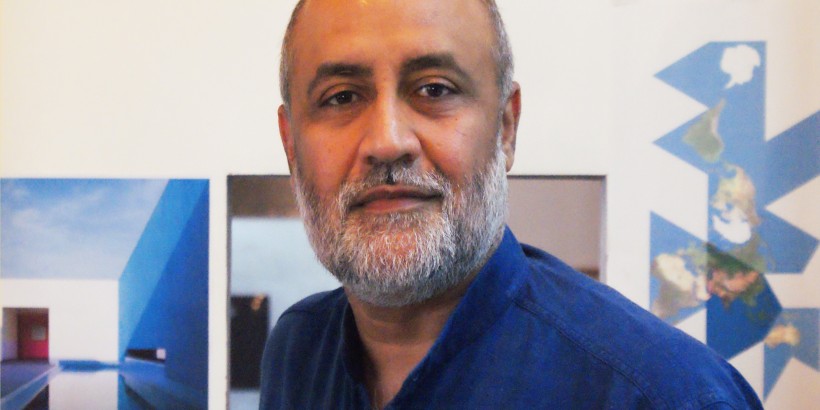
Major achievements: Mehrotra founded RMA Architects in 1990 and combines practice in Mumbai with teaching at Harvard Graduate School of Design. His work includes the restoration of Chowmahalla Palace, a conservation plan for the Taj Mahal, institutions, social projects and research on the temporary Kumbh Mela city. RMA received a Special Mention at the 2018 Venice Architecture Biennale.
Projects explained: Chowmahalla Palace shows how restoration can recover a complex’s public and cultural value rather than freeze it as an object. The Hathigaon project near Jaipur provides housing and shared water infrastructure for elephants and their caretakers. CEPT University’s library creates a flexible learning environment while fitting into an established campus. His Kumbh Mela research studies how a huge temporary city can assemble, operate and disappear.
Current or upcoming: Mehrotra continues practice, research and teaching. Harvard’s current profile lists recent institutional, laboratory, conservation and social projects, but it does not constitute a dated construction pipeline. New work should be called upcoming only after RMA or the commissioning institution announces its status.
Why he ranks seventh: Mehrotra connects buildings with conservation, public advocacy, writing and the changing life of Indian cities. His “Kinetic City” is an influential way to understand informal and temporary urbanism. Source: Harvard GSD.
8. Christopher Charles Benninger

Major achievements: Benninger built a substantial Indian career in architecture, planning, writing and education. His practice received multiple Indian Institute of Architects national awards, and CEPT University conferred an honorary doctorate in architecture.
Projects explained: Mahindra United World College uses courtyards, paths and varied building clusters to create a residential learning community. Suzlon One Earth integrates offices, landscaped courts and environmental systems into a corporate campus. Samundra Institute of Maritime Studies uses a strong campus plan and distinctive forms to give specialised technical education an identifiable place.
Current or upcoming: Benninger died in 2024. CCBA Designs continues as a practice, but subsequent firm projects must be credited to the responsible design team and not presented as Benninger’s personal upcoming work.
Why he ranks eighth: His disciplined campus planning, institutional buildings and books—including Letters to a Young Architect—created a legacy across both practice and education. Source: CCBA Designs.
9. Sheila Sri Prakash

Major achievements: Sri Prakash founded Shilpa Architects in Chennai in 1979 and developed work across architecture, planning and sustainable design. Her practice has addressed housing, infrastructure, cultural facilities and large urban projects.
Projects explained: Madras Art House reflects her engagement with culture and the arts. Work associated with Mahindra World City brings planning and architecture together at township scale. The Kuchipudi Art Academy connects built space with performance and cultural continuity. Across the practice, sustainability is assessed through climate, resource use and social outcomes rather than appearance alone.
Current or upcoming: Shilpa Architects remains active, but its publicly accessible material does not provide a reliably dated list of all future commissions. Readers should verify whether a displayed project is proposed, under construction or completed on the firm’s official project page.
Why she ranks ninth: Her pioneering independent practice, emphasis on sustainability and long engagement with social and urban questions give her a distinctive place in Indian architecture. Source: Shilpa Architects.
10. Sanjay Puri
Major achievements: Puri leads a contemporary Indian practice known for offices, hospitality, housing and educational buildings. The studio’s work frequently uses screens, courtyards, terraces and orientation to respond to heat and daylight.
Projects explained: Rajasthan School uses angled red screens and shaded circulation to control glare and heat while giving the campus a strong identity. 18 Screens wraps a house in patterned screening that improves privacy and filters sunlight. The Street organises student housing as a vivid sequence of social spaces rather than a repetitive hostel block. These projects show how environmental response can also generate memorable form.
Current or upcoming: The studio maintains an active portfolio, but the official site does not publish a single dated “upcoming projects” schedule. Status should be taken from individual project pages or direct announcements, because concept, construction and completion dates can change.
Why he ranks tenth: He represents a visible current generation translating climate-responsive ideas into bold commercial and institutional forms. Source: Sanjay Puri Architects.
Rising Indian Architects and Practices to Watch
Editorial note: This is a watchlist, not a ranking or a guarantee of future success. These practices were selected because recent independent architecture coverage highlighted their developing work and ideas.
Kaviar Collaborative — Kasturi Wagh and Vineet Hingorani
This young Mumbai-linked practice was selected for the Wallpaper* Architects’ Directory 2026. Its House by the Lake combines contemporary geometry with local stone, exposed concrete and reclaimed wood, showing an interest in how architecture frames landscape and everyday experience. Source: Wallpaper*.
pk_iNCEPTiON
ArchDaily included pk_iNCEPTiON in its 2026 survey of small Indian studios redefining architectural practice. APICSTOCK is watching how the studio’s portfolio develops, particularly its ability to turn a distinct design position into consistent built work. Source: ArchDaily.
Studio Juggernaut
Studio Juggernaut appears in the same 2026 survey of independent Indian practices. Its inclusion makes it a useful practice to follow as smaller studios explore new forms of design agency, collaboration and project delivery. Source: ArchDaily.
Naav Studio
Naav Studio was highlighted among small practices contributing fresh approaches to India’s built environment. Independent editorial recognition is an early signal, while a longer record of completed work will determine its lasting influence. Source: ArchDaily.
atArchitecture
atArchitecture was also named in ArchDaily’s 2026 overview. Its inclusion alongside practices working on socially and ecologically responsible projects makes it a studio worth following as its built portfolio develops. Source: ArchDaily.
Future additions should be based on independently documented built work, professional information and verifiable recognition—not paid placement or social-media popularity alone.
What these upcoming projects mean for Indian cities
The confirmed work is concentrated in civic institutions, museums, affordable housing, campuses, parks and large urban redevelopment. That mix points to three priorities: managing density, improving public infrastructure and designing for hotter climates. A prestigious name alone does not guarantee public value; projects should also be judged by accessibility, maintenance, environmental performance, displacement risk and how well they serve local communities.
How to choose an architect for your project
A famous name is not automatically the right fit. Check the architect’s Council of Architecture registration, experience with your project type, local approvals knowledge, scope, fee structure, consultants, timeline and completed references. Ask who will actually lead the work and document all deliverables before paying an advance.
For more context on cities, buildings and sustainable development, explore the APICSTOCK Guides & Articles hub.
Frequently asked questions
Who is India’s most internationally recognised architect?
Balkrishna Doshi holds a unique position as the first Indian recipient of the Pritzker Architecture Prize, awarded in 2018.
Is this an official national ranking?
No. It is an editorial ranking based on stated criteria and verifiable achievements. Different lists may reasonably prioritise heritage, sustainability, contemporary practice or commercial scale differently.
Does the list include architects who have died?
Yes. Architectural influence lasts beyond a practitioner’s lifetime, so the list includes late masters alongside active architects. Their legacy activity is clearly separated from new commissions.
Are all listed future projects guaranteed to be completed on schedule?
No. Large projects can change because of approvals, finance, procurement, litigation or construction conditions. Always check the architect’s and client’s latest official update.
Final perspective
The best architects in India cannot be reduced to one style. Doshi and Correa shaped a modern Indian vocabulary; Baker made economy and climate central; Rewal and Contractor transformed institutions and metropolitan scale; Somaya, Mehrotra, Benninger, Sri Prakash and Puri expanded conservation, education, sustainability and contemporary practice. Their ranking matters less than the different lessons their work offers.